


Continuing our series about a regenerative worldview for organizations, today we ask an important question:
What does leadership look like in an organization that is designed to regenerate?
Human organizations default to pyramids. We create hierarchies, and as we go up, there are fewer people. We label the people at the very top as the leaders of the organization. Nature would see these hierarchical designs as fragile, not resilient. There is no such thing as a CEO in Nature!
Nature is a regenerative system. It’s the result of 4.2 billion years of R&D that has repeatedly demonstrated its ability to regenerate life on this planet. That matters, and it’s why leadership, fragility, resilience, and regeneration are worth examining through Nature’s lens.
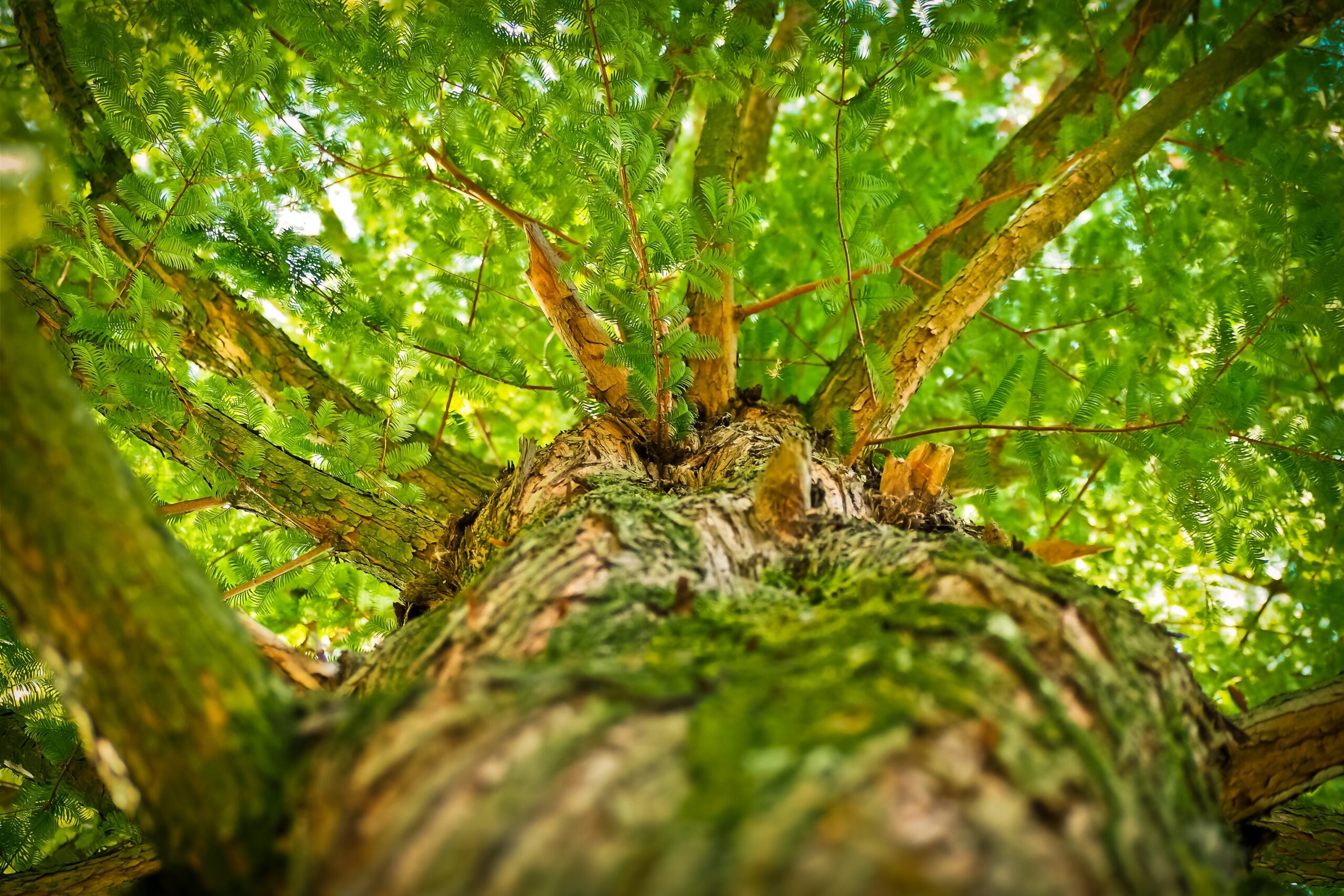
Nature is structured more like a network than a traditional human hierarchy. This means there aren’t organizational hierarchies, but a rich, interdependent network of actions scattered throughout the whole ecosystem. Nature’s model means that leadership is not viewed as a position or accumulated power, but as an emergent property of the system. Leadership is created by the many individual actions within a system or organization. It’s not attached to an individual person or to a specific position.
The case for distributed leadership
In the regenerative literature, polycentric governance is a characteristic of resilience. Polycentric leadership means there’s no single leadership center in a system, but many centers across an organization or a resilient ecosystem. This kind of distributed leadership is not just a philosophy of leadership or an adjective we put in front of leadership to distinguish it from traditional leadership beliefs. It is a proven structure tied to an organization’s resilience, giving the system the ability thrive in the present and also in the future.
Nature teaches us that when organizations create self-organizing, distributed leadership structures and processes, we reap the benefits of becoming more resilient—and more regenerative.
We often wonder what would happen to an organization or department if something were to suddenly happen to its leader. Would it survive or collapse? I’ve seen what happens when leadership lives in one person, and it’s usually the latter.
So how do we build organizations that don’t depend on one person to hold them together?
Leadership as an emergent property
Leadership should be viewed as a collective act that emerges from many individual actions and the organization’s core purpose. In that way, it becomes a critical aspect of building a regenerative system. As we shift our traditional leadership frameworks from hierarchies to distribution, our systems will become more regenerative. If an individual leaves the organization, it will have others to fill in and continue to help it move forward and achieve its purpose. That’s the very essence of regeneration, isn’t it?
Distributed leadership doesn’t just change how decisions are made. Over time, it changes the very nature of how an organization lives and breathes as a whole. But it doesn’t end here. Next week, we’ll explore what it takes to build a genuinely regenerative culture.

Love it
I see leadership as a potential energy within a dynamic team or community.
Archimedes said ‘give me a lever long enough and a place to stand and I can lift the world’… Leadership is the lever, humility is the place to stand… Perhaps?