

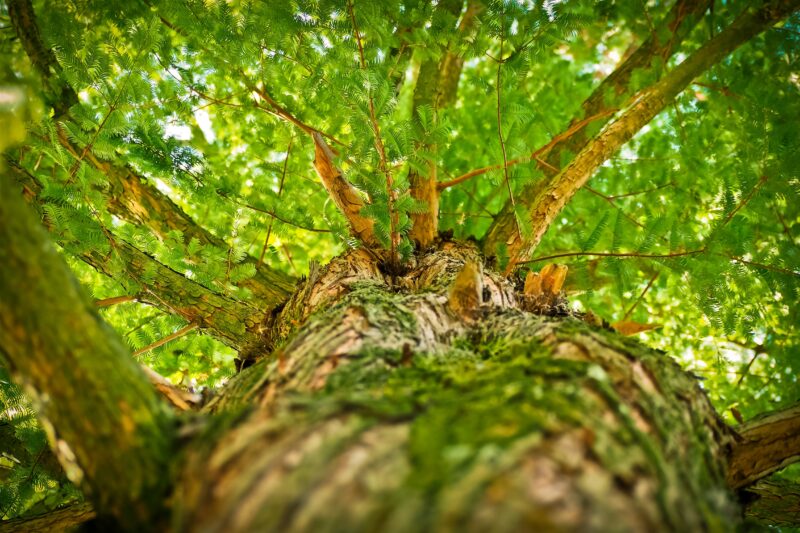
Gardeners prune bushes and trees so the plants can grow healthier, evolve, expand, and create space for other things that might be growing underneath a canopy. Despite being tucked away, those green leafy species may have wonderful possibilities if given a chance to grow.
Gardeners understand that pruning isn’t about making a plant smaller. Pruning helps a plant direct its energy where it can do the most good while creating the conditions for new growth to emerge. Nature follows this same pattern in ways that are both subtle and remarkably wise.
An example from the oaks
Nature’s type of intentional pruning is vital for the ecosystem to thrive and grow. I have about twelve 200- to 300-year-old oak trees in my yard. Every time there is high wind or a thunderstorm, I find many dead branches in my yard afterward. I started wondering why this happens. At first, I thought it might suggest something about the tree’s health.
Looking deeper, I realized that oak trees have an intentional way of letting go of lower branches.
As an oak tree grows, its trunk widens as it grows taller. The tree’s canopy, which brings it nutrients that help it grow through photosynthesis, also becomes taller and wider. Lower branches don’t move up into the canopy; they basically stay where they are relative to the trunk. Over time, these lower branches have a harder time gaining sunlight.
Initially, oaks nourish all their branches. Since they can’t receive sunlight, the lower branches eventually no longer nourish the tree, and the tree stops supplying them with nutrients. As the lower branches gradually die off, the tree creates a self-healing closure between that branch and the trunk. A big windy storm helps the dead limb fall off, yet there are no open wounds in the tree. It’s already healed!
3 ways to practice pruning
Right now, it feels like we’re all too busy, with too many things to do, and not enough time to do them. We can learn from Nature’s pruning practices so hidden, more meaningful areas of our lives can flourish. As humans, I think the ways we “prune” take on three distinct meanings and patterns:
- We prune to let go of what no longer nourishes or serves us.
- We prune around our purpose, examining those activities and behaviors that make life more meaningful.
- We prune to better define our sense of identity, uncovering what shapes our priorities and our actions.
- When I apply that idea to people I work with or to myself, it raises a simple yet powerful question for us.
What am I giving my time and energy to that no longer serves or nourishes me?
This question invites us to reflect on our lives and consider what we could let go of. Maybe it’s a habit we give a lot of time and energy to, but it doesn’t nourish us in return. Perhaps it’s a volunteer role we’ve been doing for a long time. It could even be our job, which used to be meaningful and fun, but the workplace dynamics have changed. As we evolve, the things that nourish us change as well. We need to provide nutrients to the behaviors, actions, and beliefs that support our growth, and like the oak tree, drop the “lower branches” that no longer provide nourishment.
Reflecting on our own personal pruning, and our pruning practice, helps maintain our energy and bolsters our spirit. It helps us to feel more fulfilled and ensures our lives have meaning. Maybe we can just focus on the question: What can I prune from my life right now?
Next time, I’ll turn toward the role of purpose in this pruning metaphor, and how this reshapes our lives.

I love the pruning personally concept and am going to take action this week.
Just the reminder I needed today of letting go. And, in reading, I thought, the fallen branches, left to decompose, would nourish the soil and subsequently the roots of the tree – through decomposition rather than photosynthesis. In this way, even pruning brings nourishment.
Pruning often takes courage – my apple tree grows much better when the pruning in the winter can look quite harsh – but it then grows with an abundance of fruit. We often hang onto things and fear letting go – possessions, letters from the past, the dress not worn for ten years! Your oak trees are very wise and we should be braver and wiser and prune to grow to become what we were meant to to be and do in the world. Thank you Kathleen from the UK