

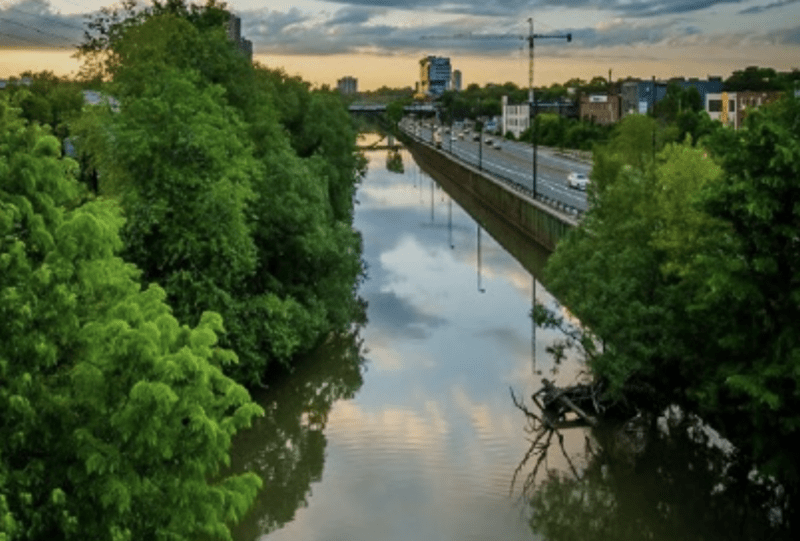
In the 1960s, the Don River in Toronto, Canada, was identified as a dead ecosystem. This was the reality of the river. Today, it’s a beautiful example of how partnerships between Nature and living systems can transform any system—or an entire organization.
The Don River is an important ecosystem, flowing through Toronto into Lake Ontario. Instead of accepting the declaration that the river was dead, many groups started working to restore the ecosystem that flows into Lake Ontario through Toronto. To help, the Canadian government invested over a billion Canadian dollars in wetlands restoration.
As a result, this formerly “dead” ecosystem is now regenerating, and over twenty species of fish have returned to the watershed and river. The Don River is coming back, and it is glorious to see.
An important theme in this story is Nature’s role in helping to regenerate the ecosystem in this river. Nature is designed to regenerate every single day and in every place with natural ecosystems. Throughout our entire planet, Nature is constantly regenerating systems in a beautiful, organic manner.
This is the unseen power that Nature brings to our world. Ecosystems, micro-ecosystems, our garden, and even people are designed to regenerate. This can only happen, however, if we believe are a part of Nature. Not apart from it.
Naming the Unseen Partnership
We report stories of regeneration like the Don River as though it were designed by humans. We take the credit for the success of this restoration project and others. This particular case credited the Canadian government’s choice to restore the wetlands that feed the river as the reason the ecosystem came back.
In reality, the Canadian government, in this case, actively partnered with a wide range of people and groups who cared about the Don River. Most importantly, they partnered with Nature, a powerful force that unfortunately didn’t get the credit it deserves.
In this post, let’s name our unseen partnership with Nature—a living system designed to regenerate.
Learning to See the Unseen
The Don River story reminds me that when we do ecological restoration, we are partnering with a very powerful system that’s designed to help do just that. It’s an example of regeneration that we can apply to organizational development, which we’ll see in a moment.
As human beings, sometimes what we really need to do is get out of our own way. In the case of the Don River, the pollutants generated by human beings killed the river. Getting out of the way might mean cleaning up the source that is polluting the river. It might be restoring wetlands in the area that help the ecosystem’s watershed. Whatever the solution, we need to let Nature and its regenerative design capabilities take it the rest of the way. Why?
Nature has an incredible amount of experience—over 4.5 billion years—restoring and regenerating ecosystems.
Partnering with Living Systems in Organizations
My life’s work has been centered on the idea that, like Nature, organizations are also living systems. With this in mind, we can trust that the system itself will support the transformation you’re trying to achieve. With this in mind, we can see the organization as an active partner, just like the partnership between the Canadians and the ecosystems of the Don River. This mindset alone will move us forward to creating more resilient, healthy, and effective human systems.
Curious to see how that happens? In my next blog, I will offer examples of how partnering with the living system of your organization can amplify organizational development.
___________________________________________________________________________________
 When we treat Nature as a model, mentor, and muse, we embrace a new paradigm in leadership and organizational development.
Following Nature’s Lead, Dr. Kathy Allen’s latest eBook, is a vital guide to Nature’s insights for leaders who want to create efficient, sustainable organizations.

I love the Don River example of regeneration.